Factory-Direct vs. Dealer: How to Choose for Bulk Excavator and Backhoe Orders
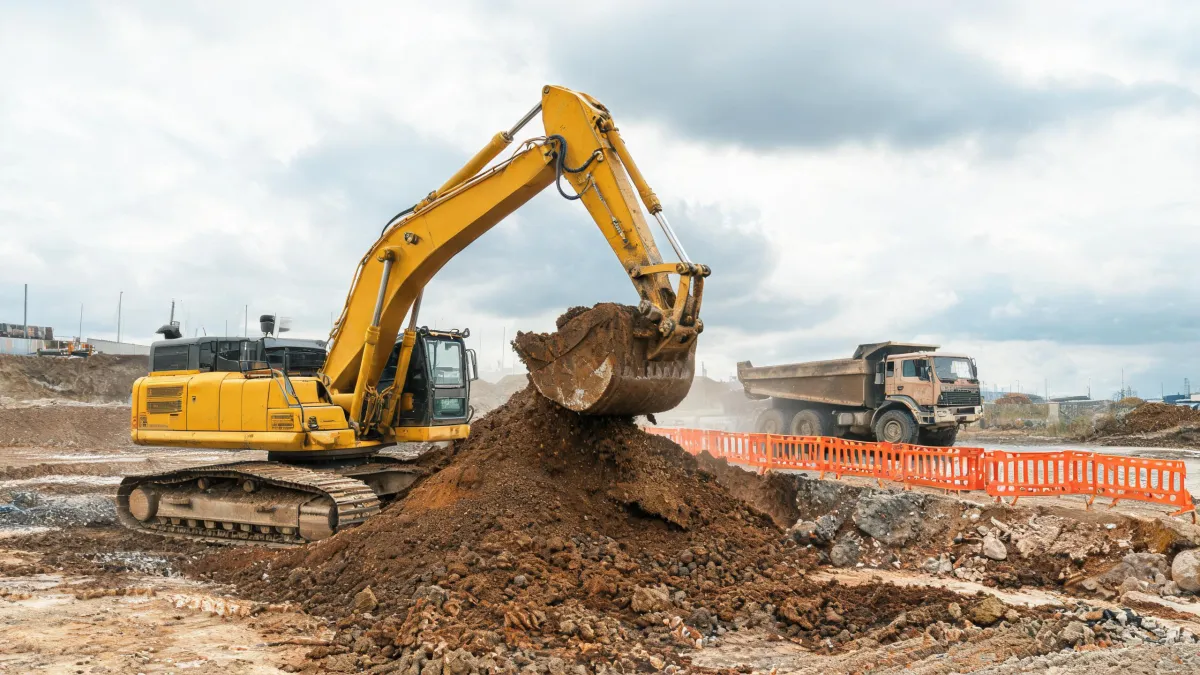
One excavator? Go to a dealer. That's not a controversial suggestion.
But what if you're buying twenty? Or fifty backhoe loaders with your own logo on the cab door? Or a mixed fleet that has to show up on-site in five weeks because your contract has a penalty clause? That's a different buying process entirely—and the "dealer down the street" approach doesn't scale the way you'd hope.
If you've been researching a Sunward excavator for sale, you've probably seen both routes already: polished dealer inventory pages on one side, direct factory quotes on the other. For bulk and wholesale orders, that's the fork in the road. I'm going to compare these two procurement routes head-to-head: factory-direct OEM sourcing (buying from a manufacturer like Sunward, straight from the production line) and dealer-sourced buying (purchasing through local distributors of established brands).
In my role coordinating equipment orders for contractors and rental companies, I've handled 40+ bulk orders with urgent deadlines over the last seven years. Some went factory-direct. Some went through dealers. A few went through both—and that's where the comparison gets interesting.
Here's the framework I use when helping clients choose. Five dimensions: lead time, customization, quality consistency, total cost of ownership, and after-sales support. Let's take them one at a time.
1. Lead Time and Responsiveness
Ask a dealer for a quote on a single excavator and you get an answer fast. Ask for a firm, written delivery date on 15 units with specific specs, and the response time… stretches. Dealers stock what they anticipate selling, and most dealers don't anticipate bulk fleet orders. If they don't have 15 units in inventory, they're ordering from the factory anyway—which means you're waiting on a factory timeline with a dealer margin added on top.
Factory-direct flips that dynamic. The manufacturer's sales team works directly with production planners. They can tell you, in writing, which production slot your order occupies and when the machines roll off the line. Not "probably." Not "should." In writing.
Why does that matter? Because when a deadline is contractual, the number on the quote is secondary. What matters is whether someone is accountable for it.
In March 2024, a contractor called on a Tuesday. He needed 12 excavators at a highway job site in Nevada, and the contract included a $15,000-per-day penalty for late mobilization. Five weeks to delivery. Normal lead time for that specification: eight. A dealer had quoted him three weeks—a number I distrusted immediately. When I asked the dealer to put it in writing, the response was, "We don't commit in writing on bulk orders."
We went factory-direct instead. We confirmed specs the same day, compressed the production slot, and arranged direct transport. The machines arrived with four days to spare. The rush fee on top of the base order cost about $12,000. The alternative was $15,000 per day in penalties if the dealer's "three weeks" stretched to six—and it usually does.
That same year, we had a different order where I said, "we need these on-site by the 15th," and the factory heard, "we need these shipped by the 15th." We discovered the mismatch when the machines cleared customs two days before the deadline—still 600 miles from the job site. Communication failures like that don't come from malice; they come from ambiguity. Now every order we place includes line-item delivery milestones with responsibility assigned to a person, not a vague promise.
Here's an honesty note: I'm still not sure why some factories consistently hit their quoted dates while others miss every single one. My best guess is internal buffer—the good ones build slack into their production schedule. But I've learned to test a new factory's timeline claims with a small first order before trusting them with a large one.
Conclusion: factory-direct wins on accountability, not on magic. You get a date you can actually hold someone to.
2. Customization and OEM Support
This is where the two routes separate the most.
A dealer sells what the factory already built. The color is the color. The bucket is the bucket. If you want a machine that carries your brand—your name, your colors, your fleet numbering—a dealer can't do that. Their agreements with the brands they represent usually prohibit it. And when they can add a decal, that's a sticker, not a factory finish.
Factory-direct OEM programs are a different world. Search for "excavator OEM" or "PC excavator OEM" and you'll find dozens of factories claiming the capability. The reality: a true OEM program requires a manufacturer with flexible production lines, a dedicated specification team, and enough scale to make your order worthwhile. That's what buyers are really asking about when they search for private-label backhoes and bulk excavator options.
With a manufacturer that has a genuine OEM program, the answer is yes. You sit with the engineering team, agree on a specification sheet, decide on paint color and branding, and the machines come off the line with your identity baked in—not applied afterward. For rental companies, this is transformative. Your customers see a cohesive fleet instead of a mismatched collection of dealer leftovers.
And there's a brand-image angle beyond aesthetics. When a rental company puts its own name on a machine, it tells customers: this is our equipment, and we stand behind it. That perception carries weight well beyond the paint. The first impression that customer gets when the machine rolls onto their site is the impression they'll keep of your entire company. I've seen clients switch to OEM-branded fleets and report that customers perceive them as more established—even when the underlying machine is identical to what competitors are running.
Conclusion: if branding or specification changes matter, dealer-sourced can't compete. Factory-direct OEM is the only real route.
3. Quality Consistency: The Assumption Most Buyers Get Wrong
Here's an assumption I hear constantly: "Buying an established brand through a dealer is safe. Buying direct from a Chinese factory is a gamble."
I held that view myself. Then I started visiting factories.
Here's the counter-intuitive finding: with a Tier 1 OEM, factory-direct quality is often more consistent than dealer-sourced stock—because you're eliminating middle layers of handling, storage, and batch mixing. Dealer inventories can sit in a yard for months. They get moved, bumped, exposed to weather. Over time, a "new" machine from a dealer is a unit with an unknown history, and the dealer has little incentive to disclose it.
None of this means factory quality is automatic. It depends entirely on the manufacturer's quality management system. The credible ones hold ISO 9001 certification for their production processes, ensure CE marking for European-market machines, and verify against ISO 2867 safety standards for earth-moving equipment. Not every factory is at that level. When sourcing direct, you need to audit, visit, and verify. That's the catch.
But here's what verification looks like when you're factory-direct: you can walk the production line while your units are being built. You can request third-party inspections for your specific serial numbers before shipping. And if there's a defect, the resolution path is you → manufacturer. No dealer, no regional distributor, no game of telephone. (Note to self: I really should turn my factory audit checklist into a published guide—the request comes up every month.)
On one dealer-sourced order I supervised, we discovered the 20-unit fleet contained machines from three different production years. On a comparable factory-direct order, all 20 units had sequential serial numbers and identical weld quality. That's the consistency you're buying when you control the source.
Conclusion: factory-direct is not the quality gamble people think it is—provided you vet the manufacturer. The bigger gamble is relying on a dealer's assurance without inspecting the actual units.
4. Total Cost of Ownership: The Real Invoice
"What's the catch?" That's the first question I get when a client sees a factory-direct quote that's 15–20% below the dealer equivalent. It's a fair question.
Let me tell you about a mistake I made. In 2022, I helped a client buy 10 backhoe loaders for a utility contract. The factory-direct quote was $65,000 per unit from a workshop that looked fine on paper. The reputable OEM's quote was $78,000. I pushed the client toward the cheaper option.
The machines failed emissions compliance at registration—the workshop's documentation didn't match the actual engine configuration. Rework ran $5,000 per machine, and the client lost two weeks. The $130,000 in "savings" turned into a net loss of roughly $50,000 after downtime, rework, and compliance fines. The client didn't blame the workshop. They blamed me. They were right.
The honest cost comparison looks like this:
- Factory-direct from a reputable OEM: lower unit price, direct parts sourcing, and better specification control. But you absorb the work of specification review, logistics coordination, and potentially a factory audit.
- Dealer-sourced: higher unit price, but you get local coordination, simpler returns, and a familiar invoice process. You're paying for convenience—and it's worth acknowledging that's what it is.
On a single machine, the dealer premium buys real convenience. On a 20-machine fleet, that premium runs six figures, and the "convenience" is a phone call. The math moves decisively toward factory-direct once you have any internal procurement capability at all.
Conclusion: total cost of ownership depends on your ability to absorb logistics and verification work. If you can, factory-direct wins on real terms. If you can't, the dealer premium is a legitimate operating expense, not a rip-off.
5. After-Sales Support: Where the Dealer Fought Back
I'll be straight with you: this is where the dealer route wins.
A good dealer has technicians in your region. They stock parts locally. When a machine goes down in the middle of a job, they can get a truck to you within days. Factory-direct manufacturers are improving—many run regional parts warehouses and dispatch commissioning engineers—but time zones and distance add friction that no amount of good intention removes.
Still, the real determinant is your own service capability. My wholesale clients who run their own mechanics can buy factory-direct safely. They don't need dealer hand-holding. A client who outsources all maintenance should pay the dealer premium for a support contract, because the cost of downtime will dwarf the markup.
Conclusion: don't compare factory vs. dealer support in the abstract. Compare your support needs with what each route actually offers.
How to Choose for Bulk Backhoe and Excavator Orders
Here's the context you should keep in mind: my experience is based on about 40 bulk orders with contractors and rental companies across North America and the Middle East—mostly mid-sized fleets of 5 to 30 units, standardized models. If you're sourcing for government infrastructure fleets with different compliance requirements, your experience might differ. Take my suggestions as a starting point, not a rulebook.
Choose factory-direct when:
- You're ordering 10 or more units in one batch
- You want OEM/private-label branding and customized specifications
- You have in-house procurement or maintenance capability
- You're building a long-term relationship with a manufacturer—that's when lead times and pricing get noticeably better
Choose dealer-sourced when:
- You need one or two machines fast
- Local warranty and maintenance support are your top priority
- You don't have experience with import logistics and compliance paperwork
- Your customers specifically demand a brand that only dealers carry
The hybrid path. If you're a growing contractor, buy your first machines through a dealer while you build volume and experience. Meanwhile, invest time in factory audits and relationship building. By the time you need a full fleet expansion, you'll have the capability to go direct—and the second bulk order pays for the transition.
One final thing. I've seen every spreadsheet analysis point toward a specific route, and I still tell clients to listen to their gut if something feels off. If a supplier—dealer or factory—is slow to respond before you sign, that's a preview of after-sales responsiveness. I've seen that pattern repeat enough times that I never ignore it.
Bulk excavator and backhoe procurement isn't a transaction. It's a supply chain decision. Compare the two routes on these five dimensions, be honest about your capability, and you'll pick the right one.