Why 'Same Spec' Excavators Arrive Wrong—And What It Actually Costs You
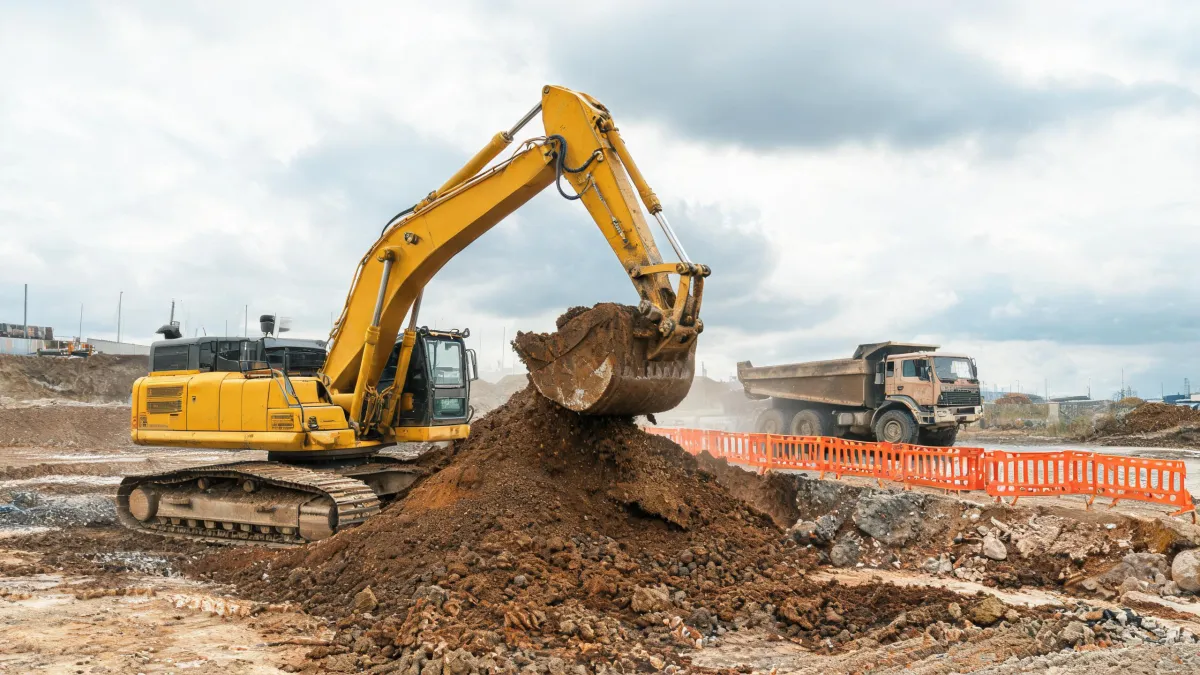
You get three quotes for a compact excavator wholesale order. Two are within a few points of each other. The third is 9% lower. You sign the third one.
Three weeks later—or rather, four, once you count the revision cycle—the machines land. The spec sheet said 3-tonne class. The plate says the operating weight is 200 kg light. The hydraulic flow doesn't match the attachments you already sold. One unit carries the wrong engine designation on the nameplate.
You spend two days apologizing to customers. One of them cancels.
I've watched this play out from the receiving dock more times than I'd like to count. I'm a quality and brand compliance manager at a construction equipment company. Every unit that ships under our brand passes through my hands first—roughly 300+ machines a year. In Q1 2024, I rejected about 12% of first deliveries. Not because the suppliers were dishonest. Because the specs we thought we'd agreed on were never actually written down.
The Problem You Think You Have
Most dealers and contractors walk into a supplier conversation with one question: "What's your best price on bulk?"
It's a fair question, and it always gets an answer. The price list looks tidy. Rows of numbers, clean columns. You start comparing one figure against another.
That's the trap. You're comparing two different things that just happen to share a format.
A compact excavator quote might read "standard boom, standard bucket, mechanical quick coupler." Each of those words is hiding three or four unspoken assumptions. Standard in one factory's catalog is not standard in another's. When the container opens, "standard" is whatever the factory decided it meant that month.
So the real problem isn't price. It's that your price list is comparing items you haven't actually specified.
Why "Same Spec" Machines Aren't
Tonnage is a category, not a specification
A 3-tonne compact excavator can mean anything from 2.7 to 3.4 tonnes of operating weight. On paper, that reads like a rounding difference. In the field, it decides whether your customer's trailer can legally haul it, whether their existing attachment set fits the auxiliary circuit, and whether their operator's certification still applies.
Then there's the undercarriage. Two machines both labeled 3-tonne might ship with 1.2 m or 1.6 m tracks. Different blade width. Different tail swing. The end user notices within the first hour—and they call you, not the factory.
If you're working from a wheel excavator specification guide, this gets worse, not better. Wheeled units vary even more on axle configuration, road speed, stabilizer setup, and whether the braking system meets road-legal requirements in your market. Two "same class" wheel excavators can be entirely different machines from a homologation standpoint.
Private label is operations, not a sticker change
OEM and private label get marketed as a pricing option. They're not. They're an operational commitment.
Who prints the nameplates, and against which artwork revision? Who handles warranty claims, and on what timeline? Whose part numbers go into the spare parts catalog? What language and what regulatory content goes in the manual? Does the machine carry your brand but the factory's serial number logic? All of it has a cost, and most of it lands on you unless it's written into the contract.
I learned this the hard way with a backhoe loader supplier order in 2022. Everything looked right at inspection. Then we opened the documentation box and found factory-original manuals with model references that didn't match anything on the machine. Not a disaster. But two days of six people rebuilding a document pack—well, seven people for a day and a half, if I'm being precise.
What the price list leaves out
A price list gives you the base model price with standard configuration. What's standard?
Air conditioning. LED work lights. Piping for breaker and grapple. Arm-end hydraulics. Quick coupler compatibility. Auto-idle. Track width. Tooth style. Travel alarm. Beacon. Some of these come standard in one market and as options in another—sometimes from the same factory, sometimes from the same line.
Each "actually, that one's an option" conversation adds a line to your invoice. By the time you spec the machine to what your customer actually needs, a quote that looked 9% cheaper can land 4% above the second-lowest bid.
Here's the part most buyers miss. The question everyone asks is "what's your best price?" The question that would actually save them money is "what's included in that price, and can you put it in writing?"
What the Gap Costs You
Rework, freight, and holding costs
In 2023, we received a batch of compact excavators where the bucket tooth adapters were cut to the wrong standard. The supplier said it was industry standard. It wasn't ours. We rejected the batch. Rework and re-shipping ran around $38,000, and pushed a large customer's fleet handover by three weeks.
The supplier absorbed the rework. Nobody absorbed the three weeks.
That's the part a price comparison never accounts for—the storage, the port fees, the idle time, the relationship damage.
Your reputation moves faster than your warranty process
When you resell or private label, customers aren't buying the factory. They're buying your judgment.
If the first machine arrives late, they remember. If the second one seeps at the swivel 24 hours in, they tell three other contractors. Nothing on your price list shows that cost. But it's the biggest number on the page.
Compliance claims you can't back up
In the U.S., the FTC requires advertising claims to be truthful, substantiated, and not misleading. That requirement doesn't disappear because you're selling B2B. If a spec sheet implies a machine "meets all applicable international standards," you need documentation that actually supports that wording—per configuration, not a single certificate applied to an entire product family.
I've seen suppliers who couldn't produce the conformity documents they were implying they had. Not because they were lying. Because nobody had ever asked to see them.
Process gaps compound
For a long time, we didn't have a formal incoming inspection. Someone walked the container, took photos, signed a sheet, and moved on.
The third time it bit us—once with misrouted hydraulic hoses, once with nameplate serials that didn't match the shipping documents—I finally built a 14-point acceptance checklist and a sign-off chain. I should have built it after the first time.
That's the pattern, by the way. Most quality problems aren't the factory's doing. They're the absence of a documented expectation.
Then I put two consecutive shipments side by side—same supplier, same unit price, six months apart. The later one arrived with almost no inspection findings. The earlier one had eleven. The difference wasn't the factory's mood that quarter. It was that the second shipment had a signed spec sheet before production started, and the first one didn't. That was the moment I stopped treating specification writing as paperwork.
What I Actually Require Before a Bulk Order
Once you understand where the failures come from, the fix is fairly short.
- Define specs line by line, not by model name. Operating weight range, track width, bucket capacity, engine output, hydraulic flow. Include tolerances, not just nominal values.
- Approve a first article before the run. Not a photo set. Not a sample from a different configuration. A unit built to your exact spec, through the actual production line.
- Treat documentation as a deliverable. Manuals, parts catalogs, warranty workflow, nameplate artwork—all in the contract, each with a date. "Included with shipment" is not a date.
- Write the inspection process before the order. A checklist, a sign-off chain, and a clear rule for who pays for rework.
- Cost the landed unit, not the quoted unit. Machine price plus freight, duty, configuration, accessory pack, and a warranty reserve.
That last point is where the efficiency argument actually lands. Doing the spec work up front doesn't slow procurement down. It compresses the entire cycle—because you cut the back-and-forth emails, the rejection, the re-ship, the three weeks at port. Suppliers with tight documentation win on time, not just on price. Which is why factory-direct channels, when they run clean paperwork, tend to outperform trading companies on total turnaround.
That's also where a supplier like Sunward sits reasonably well. The company supports OEM and private label programs across a broad excavator lineup—compact units, wheeled configurations, and backhoe loaders included. A Sunward excavator price list, like any other, is a starting point; the configuration is what determines the final number. And when your spec sheet is specific, that product breadth becomes one contract covering multiple SKUs instead of five separate negotiations. When the spec sheet is vague, no amount of product range fixes the outcome.
None of this is complicated. It just isn't where most buyers spend their time. They pour ninety percent of their effort into price and ten percent into specification. Flipping that ratio is the whole difference between a shipment that closes a deal and one that generates three weeks of phone calls.
Start with the spec sheet. The price will sort itself out after that.