Why I Approved a Six-Machine Sunward Excavator Order (And What I Checked First)
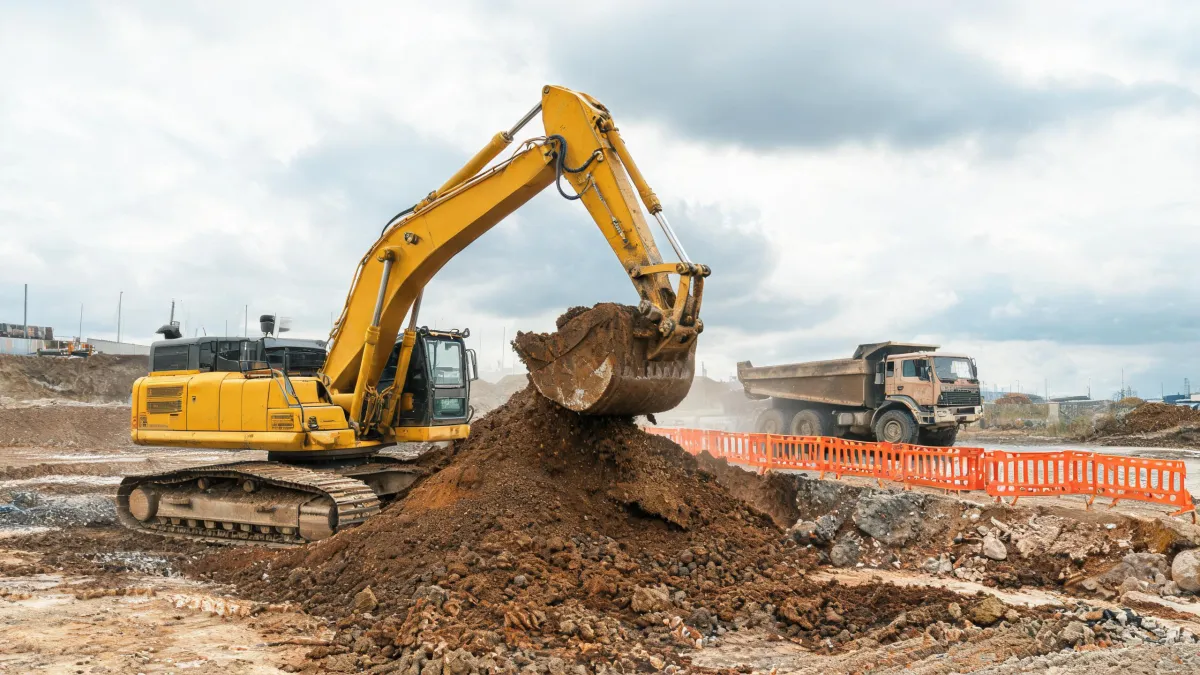
The first time I added Sunward to a quote comparison workbook, I almost didn't. It was February 2024, and I had a $340,000 line item for six compact excavators that our regional managers had been asking about since fall. My own procurement policy says any purchase over $25,000 needs at least three quotes. So Sunward got a row in the spreadsheet—mostly, if I'm honest, to make the two "real" suppliers properly nervous.
I'm a procurement manager for a 42-person equipment rental and light construction company operating in three states. I've managed the equipment budget—roughly $2.3 million per year—for six years, and I've logged every PO, repair ticket, and resale in our cost tracking system. That system has saved me more than once. This time, it also made the decision harder than it needed to be.
How I Ended Up Comparing Three Quotes in the First Place
The request started in October 2023. Our biggest maintenance contractor asked us to carry more 4-to-6-ton mini excavators—he was tired of renting machines that were either too small or way too big for half his jobsites. We'd been running two 4-ton machines for years and they were hammered. So the ops director and I agreed: six machines in the 5-6 ton class, zero-tail-swing preferred, delivered by the end of Q2 2024. And since attachments carry the highest margin in our rental fleet, he also asked me to look into putting our own brand on backhoe buckets.
I sent RFQs to three vendors: a national dealer for a brand I won't name, a European imported line we'd tried a couple of machines from, and one company I mentally flagged as "too good to be true" because of where it's built. That last one was Sunward.
The numbers landed on a Tuesday.
The incumbent: $58,200 per machine, twelve-week lead time, and a support package with two years of telematics plus a dedicated account manager. The European import: $54,600 per machine, sixteen to eighteen weeks, no telematics. Sunward: $42,750 per machine, eight- to ten-week lead time, telematics standard.
Let me be honest: that $42,750 number made me suspicious, not happy. Everything I'd read about Chinese-built equipment said you'd pay in downtime what you saved on the invoice. I'd also heard the compliance paperwork is a nightmare—EPA in the US, Stage V in Europe. I'd once rejected a whole shipment from a different Chinese maker because the emissions certificates didn't match the engines. I was not going through that again.
So I did the thing I always do when I want to say no: I dug in. I asked Sunward for the compliance package before I'd even commit to a factory visit. And that's where the story took the turn I didn't expect.
The Surprise Wasn't the Excavator. It Was the Binder.
Ten days later, a box showed up from Sunward's regional office. Inside: a blue binder, maybe forty pages, titled "Compliance Dossier—SWE60UF." I've been purchasing for six years, and I had never received anything that thorough from any vendor. Not once.
Page three was the CE Declaration of Conformity referencing Regulation (EU) 2016/1628 for Stage V emissions. The engine certificates each had numbers we could trace to the manufacturer's EU type approval. Next came the EPA Tier 4 Final certificates for the engine model, which sits in the 19–56 kW class—the class that has been subject to Tier 4 Final since 2014. There was also a letter from their US importer of record accepting responsibility for EPA compliance, and a separate CARB blurb for California. That's the kind of granular detail you only produce when you've actually shipped there before.
I sat with that binder for an hour. Then I booked a flight to Changsha.
The Factory Visit and a Backhoe Bucket Sidenote
I'll keep the factory details short: it was clean—seriously clean—and they build buckets and other attachments in the same complex, not in a separate contractor shop. That last part isn't a guarantee of quality. But it does make an audit simpler when everything is on one site and you can watch the cutting table and paint line with your own eyes.
What really changed my mind was a two-hour conversation with their compliance engineer. I asked which markets the SWE60UF was certified for. He listed the EU, the US, Australia, and China (under the GB IV non-road standard, which has applied to new non-road machinery since December 1, 2022). I asked to see the engine invoice versus engine certificate match—the exact problem I'd hit with the previous Chinese supplier. He pulled up a serial number trace before I finished the question.
I also brought up backhoe buckets because the ops director had asked me to. I assumed the attachment line was a catalog page with generic buckets. It wasn't. They offered custom dimensions, steel grade options, and a private-label program where our logo goes on the bucket. Minimum order quantities were... low enough for a short test series. Not zero, but workable.
That's when the spreadsheet and the binder stopped being theoretical.
The Two Weeks I Spent Going Back and Forth
Here's where I'll be straight with you: I went back and forth for two weeks.
The incumbent had resale value. Everyone knows it. A used machine from that name holds value on the lot, and our accountant loves that. Sunward was 22% below the closest other quote, had better telematics, and offered custom attachment support. But the resale track record for Sunward in the US? Basically nonexistent yet. That's the trade.
I did something I'm slightly ashamed of: I ran the numbers, got a clear answer, and then looked for reasons to argue with it. My gut kept whispering "established brand." My cost model said the TCO difference was about $93,000 over five years—and that was conservative. So I did the cost-controller equivalent of kicking the can: I reduced the order to four machines. Then my own policy—the one I wrote—slapped me. It says fleet expansion decisions follow the TCO model unless there's a documented risk. There was no documented risk. So I signed for six.
And then I immediately thought: what if I'm wrong about this? What if the compliance package doesn't survive a real border inspection? What if the machine quality is the same old story? I didn't relax until the first unit arrived. Actually, I didn't relax until the third. The first one could've been luck.
About two hours after signing—no, I'm mixing the timeline up. It was the next morning. I emailed the Sunward sales rep asking again for the EPA certificate numbers in a copy-pasteable list. He sent them within the hour. That small thing helped more than he probably knows.
What Actually Happened After Delivery
The machines landed at our yard in the first week of June 2024. Customs clearance took six business days. Smooth. No EPA issue, no missing stamp, no last-minute broker surprise.
In the first year, we saw 96.4% fleet uptime across the six units. We had one failed sensor replaced under warranty and a roller that wanted grease more often than the manual said. Total unscheduled maintenance: 4.1 hours per machine. I'm not going to tell you they're flawless—they're not. But the complaints were "this grease could be better," not "the engine is a headache."
And the private-label buckets? The first ten went to a contractor who now orders them in batches of four. That sideline paid for the trip to Changsha twice over. But the best part wasn't the money. It was watching someone else's logo go out on our brand and realizing we'd created a new revenue line out of a conversation that almost never happened.
What I'd Check Before You Buy: a Steal-able Checklist
Bottom line: I still sleep fine after this purchase. Not because the machines are perfect, but because I know exactly what I bought. If you're doing the same evaluation—especially with Chinese manufacturing in your consideration set—here's the checklist I now use for compact excavator compliance requirements:
- CE Declaration of Conformity: For the EU, it must reference Regulation (EU) 2016/1628 for Stage V. Verify it covers the specific model, not just the "product range."
- EPA certificates: For the US, confirm the engine model has a valid EPA nonroad certificate. For most compact excavators in the 4–8 ton class, that's the 19–56 kW class, where Tier 4 Final has applied since 2014. Get the certificate number and verify it in EPA's public nonroad engine database.
- CARB: California has separate requirements. If you operate or resell there, ask specifically about CARB compliance—it's not automatically identical to federal EPA compliance.
- Other markets: If the machine could be exported again—to Australia, China, the Middle East—ask about the local standard in writing.
- Serial number trace: Ask for engine serial numbers on the same sheet as the certificate numbers. The gap between those two columns is where bad suppliers hide.
- Importer of record: Someone in the destination country must legally take that role. If a supplier can't name theirs clearly, that's a red flag, no matter how good the factory tour was.
That last point is a big one. A factory can build a great machine and still hand you a mess at the border if the importer of record is a shell company or a freight forwarder disclaiming liability.
I'm not going to tell you Sunward is right for everyone. If your fleet depends on same-day parts support in a remote area, the incumbent's dealer network isn't just worth it—it's the only rational choice. And if your local inspectors will scrutinize a new brand's Stage V paperwork extra hard, you might reasonably pay a premium for an established name.
What I can tell you: the conventional wisdom around "you get what you pay for" kept me from running the TCO math cleanly for weeks. My cost tracking system didn't have a brand preference. It just had numbers. And once I stopped fighting the numbers, they pointed one direction.
The lesson isn't "buy Chinese." It's: know your TCO, verify your compliance paperwork, and don't let a stereotype do the math for you.
If you're weighing Sunward excavators for your fleet, evaluating a backhoe bucket supplier for a private-label attachment line, or simply hunting for a backhoe bucket manufacturer that'll actually answer technical questions, do the homework. Bring the checklist, verify the certificates, and run the TCO with realistic downtime assumptions. You might find, like I did, that the stereotype was the most expensive part of the quote.