The 12 Backhoe Loaders That Taught Me How to Choose a Wholesale Supplier (the Hard Way)
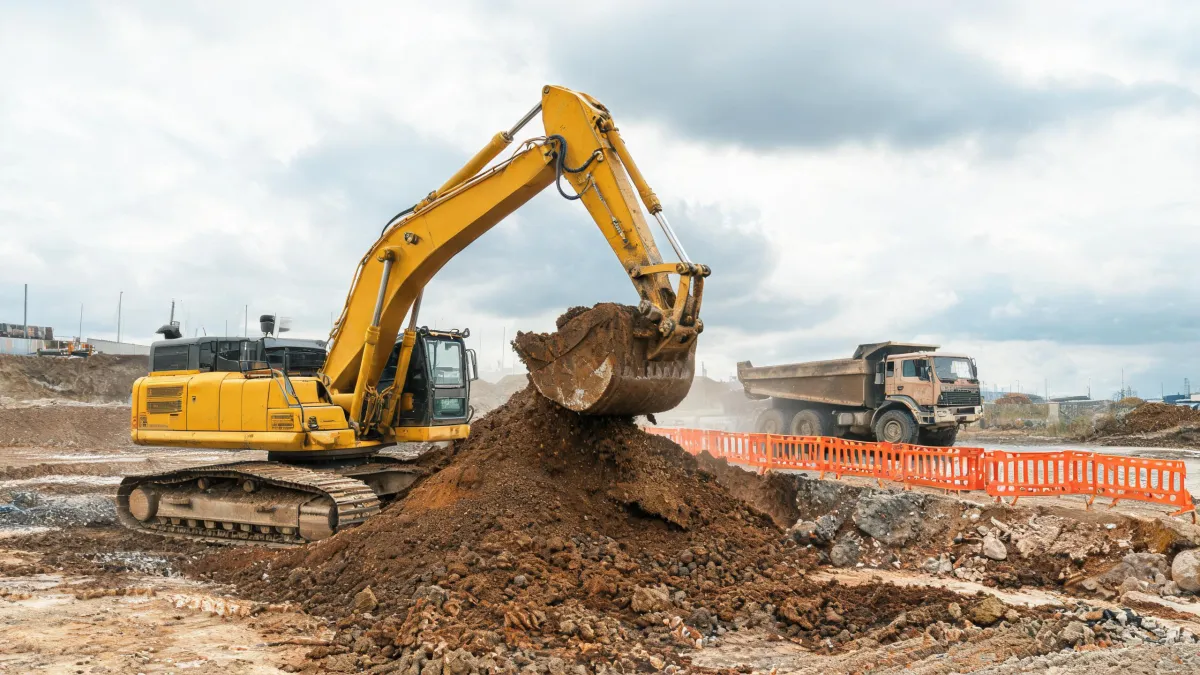
Thursday, 9:40 a.m. My mechanic Dale was on the phone, and the second he said “you need to come look at these bucket pins,” I knew the next month was going to be a special kind of painful.
Behind him were 12 brand-new backhoe loaders. Four containers. Nearly half a million dollars of machine sitting in our yard—and Dale had just discovered that the buckets the factory shipped wouldn’t fit the quick couplers our local customers use. Not one of them.
This is that story. And if you’re trying to figure out how to choose a backhoe loader for wholesale, it might save you a lot more than a little embarrassment.
How I got here
Quick background: I’m the purchasing director at a mid-sized machinery dealer in the Southeast. I’ve been importing from China since 2017—nine years now—and I’ve personally made (and documented) 14 significant mistakes, totaling roughly $215,000 in wasted budget. I keep a list. It’s the list I train every new hire with.
My first order was six Sunward mini excavators: a mix of 1.8-ton and 3.5-ton machines. For anyone shopping the entry level, the Sunward excavator price was genuinely aggressive—$12,000 to $18,000 FOB depending on configuration—and the machines held up well enough for light utility work. We sold through the first batch in about five months. That set the tone. When regional infrastructure spending picked up in 2023 and contractors started asking about backhoe loaders, the natural move was to go back to the same manufacturer and expand our wholesale line.
The evaluation (the part I got right)
Choosing a China excavator manufacturer for a wholesale relationship isn’t just about price. I compared three factories that year, and Sunward kept surfacing for a few concrete reasons.
- Product line breadth. They manufacture mini excavators, backhoe loaders, telehandlers, cranes, and a full range of buckets and attachments. For a dealer, that one-stop convenience is real. You can sign a single supply agreement instead of juggling four different factories.
- OEM and private label support. We asked about painting machines in our fleet colors and running our badge on the boom. It wasn’t a problem. That flexibility matters when your customers identify with your brand, not with the factory in Changsha.
- Factory-direct ordering. Bulk pricing, no middleman markup. That’s the whole point of a wholesale program.
On paper, their 4x4 backhoe loader looked right: 80-ish horsepower, open-center hydraulics, a quick-coupler bucket system, and a cab that was comfortable for the price class. The quotes we got landed around $30,000 to $38,000 FOB depending on options—a fair bit under what equivalent machines from established Western brands were running, with performance numbers in the same ballpark.
I also did the obvious diligence. I asked for ISO 9001 certification, called two other dealers in different states, and did a video walkthrough of the assembly line. Everything checked out. So I signed. Twelve units. I’d love to tell you there was a red flag I ignored. There wasn’t. That’s the uncomfortable thing about this kind of mistake—it doesn’t look like a mistake until it’s standing in your yard with the wrong bucket pins.
The phone call
When I got to the lot, Dale pointed at the bucket pin. In our region, virtually every attachment supplier builds buckets around a 25 mm pin bore—a 1-inch standard. It’s not a written law; it’s just what everyone uses. The factory’s quick coupler was 30 mm. A solid, metric, perfectly machined 30 mm.
“They’re nice pins,” Dale said. “Just the wrong size.”
I stood there doing mental math. Twelve couplers. Twelve bucket brackets. We had options: machine every bracket locally, or order new couplers and buckets from the factory and ship the originals back. Every option cost time and money, and all of them made the margin on that order thinner than I’d promised my CFO it would be.
We ended up ordering conversion brackets from a local fabricator—$440 each, which added up to $5,280 in parts. The real cost was the timeline: the brackets took three weeks to make, and one contractor who’d paid a deposit lost patience and canceled. That lost sale hurt more than the parts. It was about $35,000 at retail, plus trust.
What actually went wrong
Here’s the uncomfortable truth: I never asked. The spec sheet listed the coupler type but not the pin diameter. I assumed “standard” meant the same standard our customers used. It didn’t.
When I called the factory, the sales manager was polite but firm: the machine shipped with their standard attachment interface. Nothing was defective. No one had lied to me. I had simply assumed my local convention was the global one—and the factory had no reason to know otherwise.
It was a textbook assumption failure. Worse, I had no formal spec-verification process to catch it. We’d ordered attachments from this manufacturer before without problems, so the process gap never bothered me. I learned the hard way that “never had a problem” is just “haven’t had a problem yet.”
The checklist I wish I’d had
If you’re evaluating a China excavator manufacturer or figuring out how to choose a backhoe loader for wholesale, let me save you the $19,000 and the gray hairs. This is the verification list I run on every order now. It lives on a clipboard in my office, and my purchasing team can’t approve a PO without going through it.
- Confirm the attachment interface standard in your market—in writing. Pin diameter, coupler plate width, bucket pin bore. Ask for a drawing, a tech manual page, or a video of the coupler cycling. If the factory can’t produce it, that’s your red flag.
- Know which bucket rating you’re buying. “Heaped” and “struck” capacity are different measurements, and ISO 7546 and SAE J296 don’t rate buckets the same way. A 1.0 m³ bucket on a Chinese spec sheet is often the more flattering number. Clarify it in the PO.
- Check loader specs at usable heights. Maximum breakout force looks great in a brochure, but your customers dig at half mast. Ask for lift capacity at full height and at ground level—that’s the number that matters on a job site.
- Line out standard vs. optional equipment. Cab, air conditioning, reversible fan, ride control—in China, one region’s standard is another region’s $2,400 option. If it matters to your market, put it in the contract, item by item.
- Cross-reference the parts. Which filters and wear parts have local equivalents? We can service Sunward units with widely available spin-on filters, but verifying that before you commit to 12 units is smarter than discovering you’re married to an obscure part number.
- Ask for a pre-shipment inspection of the actual unit. Photos, video, serial numbers. Ask to see the machine run with the coupler cycling. It costs nothing to ask, and it catches the “stock photo” problem before the container sails.
- Get technical drawings from engineering, not sales. If the only source of specs is the sales rep’s PDF, treat every number as unaudited until you see the manual page.
Price-wise, the numbers I quoted above ($30k–$38k FOB for a cab-equipped 4x4 backhoe loader, $12k–$18k FOB for mini excavators) came from our own 2024–2025 quotes and current China export listings. Steel prices move things around, so verify current rates before you build your margin plan.
Where the money went
I track this stuff obsessively now, so let me be precise:
- $5,280 — conversion brackets for 12 machines
- $2,100 — service labor for the swap
- $35,000 or so — the canceled retail sale
- 3 weeks — delay that made every other customer nervous
The credibility damage doesn’t show up on a spreadsheet, but if you sell to contractors, you feel it for months.
Bottom line
Here’s what I tell every customer and every wholesale partner now: a spec sheet is a set of interpretations, not universal facts. The factory didn’t deceive us. We just never asked the right question. Put another way—the most dangerous word in procurement is “assume.”
This approach worked for us because we have an in-house service team that caught the problem during a pre-delivery inspection and handled the retrofit. If you don’t have mechanics on staff, be even more paranoid. Your mileage may vary depending on your market and your team.
But the fix isn’t complicated. Be curious. Ask for the drawings. Read the manual page. I still buy from Sunward, by the way—the machines themselves are solid, and the excavator line we run has one of the lowest defect rates in our fleet. I just ask more questions now, and the new hires get a very long list of lessons to learn from.
Starting with bucket pins.