Sunward Excavator Price vs. Total Cost: Advice for China Excavator OEM Buyers
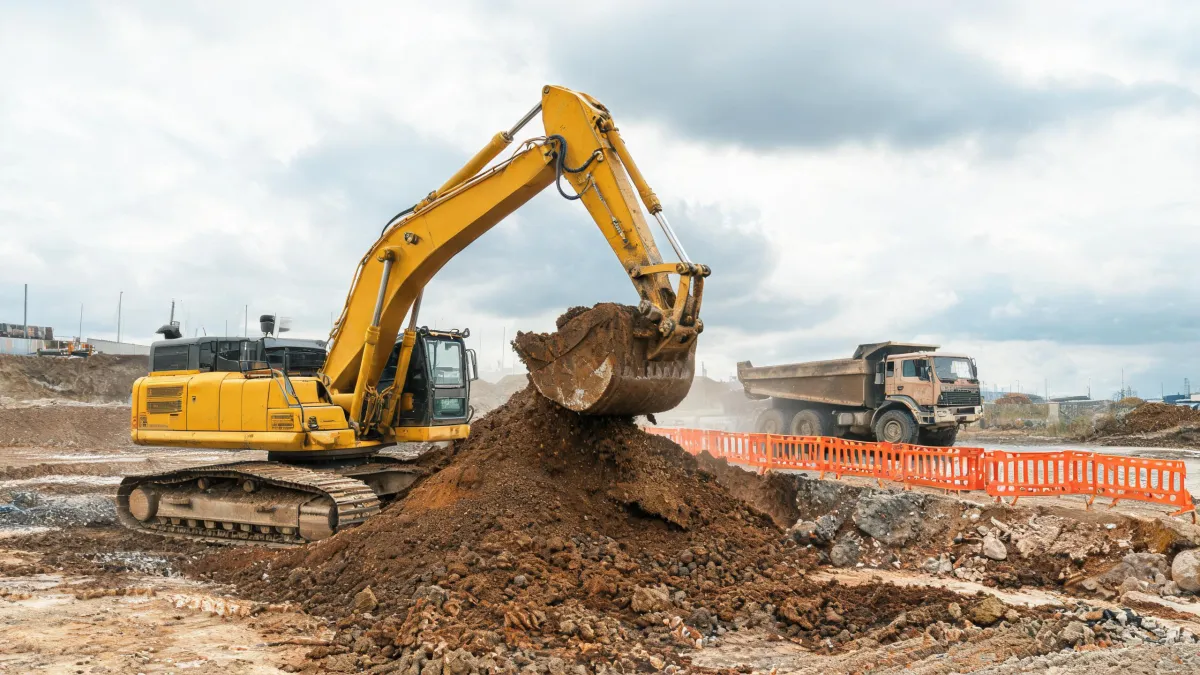
I've spent the last decade coordinating rush orders and OEM supply programs for construction machinery distributors. In that time, I've watched more than a few good companies talk themselves into the lowest quote on the table, then pay for it later in ways they didn't see coming. So let me say what I usually tell them straight: the cheapest excavator quote is often the most expensive excavator purchase you'll ever make.
This isn't a gentle “it depends” take. I've seen the pattern repeat too many times to stay diplomatic about it.
What Happens When “Cheap” Finally Shows Up
Take a case from March 2025. A distributor called me about a private-label wheel excavator order with an urgent deadline. They'd collected quotes from four China excavator OEM suppliers, and the lowest one came in roughly 18% under the nearest alternative. Not a scam, not a misprint. Just a low number.
The machine shipped eleven days late. Then we found a mis-specified auxiliary hydraulic valve on arrival. That small difference on paper turned into a serious issue on site: the distributor had to source replacement components from another manufacturer, pay expedited freight, and bring in technicians for rework. Total extra cost came to roughly $4,700 — all before the machine did a single hour of work.
When I compared that job side by side with another distributor's order from the same period — different factory, higher unit price, but on-time delivery and zero rework — the pattern clicked: price doesn't tell you how much an excavator costs; risk does.
The quote tells you the price of the machine. It doesn't tell you the price of the problems that can come with it.
What “China Excavator OEM” Really Covers
Here's something vendors don't always explain: “China excavator OEM” is not a single category. It's a spectrum.
On one end are full-scale manufacturers with their own R&D, hydraulic testing, welding quality control, and stable material sourcing. On the other end are assembly operations that buy components from multiple trading companies and put them together in a rented workshop.
Both will put your logo on the machine. Both will accept your purchase order. But after the container leaves the factory, they're completely different partners.
Because a lot of my work starts when something has already gone wrong, I judge an OEM by the questions they ask before they take my client's money:
- Do they ask about market conditions and applications? A machine delivered to a distributor in Norway faces very different demands than one delivered to a distributor in Nigeria.
- Can they provide full technical drawings and documentation? If they can't, you're buying a machine you don't actually know.
- Do they track production records? You need batch #2 to match batch #1, or your spare parts inventory becomes a guessing game.
- Can they supply genuine parts two or three years later? The cheapest part of an excavator is not the one you can't find after delivery.
Honestly, drawings and spares alone cause more emergency calls than any other issue I see. A supplier who hesitates on those questions isn't a bargain; they're a future problem with a low opening price.
Backhoe Buckets: Where “Cheap” Fails in Millimeters
If you're looking for a backhoe bucket distributor buying guide, you've probably read a lot about steel thickness and capacity. And yes, those matter. But in the real world, the most expensive failure I see is something else: pin geometry that's off by a few millimeters.
A bucket from a low-cost supplier can look identical on paper. But if the pin-to-pin distance is slightly wrong, the bucket binds, bushings wear out fast, and in one case I dealt with, it couldn't fully curl. The distributor had saved $300 per bucket and then paid a local machine shop nearly $1,800 to ream and re-bush the entire batch.
So whenever someone asks me for buying advice on attachments, I always say: compare specifications in drawings, not just prices. Get the mounting dimensions confirmed by the machine manufacturer. Ask the potential supplier how they measure and verify those dimensions before welding. It's not rocket science — it's attention to detail. But attention to detail is exactly what the cheapest supplier usually leaves out.
The Real Equation: Price + Delivery + Support + Rework
I'm not saying you should ignore budget. After hundreds of orders, I could see the pattern in our own internal data. When we buy on total value rather than unit price, the rate of expensive surprises drops dramatically. It's not that expensive machinery never fails. It's that failures from well-documented, well-supported products are easier and cheaper to resolve.
Put it this way:
- Delivery slippage costs your customer money, which means it costs you relationships.
- Specification errors get expensive only after the machine is on a ship.
- Spare parts gaps turn a routine repair into a two-week wait.
- Weak after-sales support makes you — the distributor — carry the burden alone.
That last one matters more than most buyers realize. Early in my career, I almost signed with a supplier because the unit price was unbeatable. The only thing that stopped me was a factory audit that revealed inconsistent welding. Since then, that audit is company policy — and it has saved us more than once.
“Our Budget Is Fixed” — A Fair Objection, With Options
I hear this all the time: “The purchasing plan says we can't go above X.” Fair enough. But there are ways to respect a budget without betting your whole program on the lowest number:
- Run a pilot batch before committing to a long-term private-label program with a new wheel excavator OEM. Measure delivery, dimensions, documentation, and support before scaling up.
- Negotiate phased delivery. A more capable supplier can often work with two or three production slots, keeping your inventory and average cost manageable.
- Look for a broader product family. If the same OEM can supply wheel excavators, backhoe loaders, and buckets, you carry fewer spare parts across your whole range.
- Ask for standard configurations before assuming you need a fully customized machine. Standard configurations usually cost less and have more reliable lead times.
Another thought: paying a rush premium is fine when the factory's schedule is real. But make sure you're paying for transparency, not just for the label. “Expedited production” from a factory that doesn't track its capacity is hope with an invoice.
So… What About Sunward Excavator Price?
If you ended up here by looking for Sunward excavator price information, here's the most honest answer I can offer: there isn't one flat price. The Sunward excavator price depends on the model, the configuration, the quantity, the destination, and the terms of the order. Any supplier who quotes a single global number without asking about those factors isn't really quoting you — they're guessing.
What I can tell you is how to evaluate a quote once you have it. Check the spec sheet line by line. Confirm which engine, hydraulic system, attachments, and cab features are actually included. Ask for written lead times — and what happens if the factory misses them. Look at warranty terms and spare parts availability. If you're exploring a China excavator OEM arrangement or a private label program with Sunward equipment, contact the manufacturer or an authorized export channel directly. That way, details don't disappear between a middleman's sales call and the factory floor.
I've said it before, and I'll say it again: the more direct the conversation, the fewer details get lost. Lost details are what cause emergencies — and emergencies are what I've spent the last decade cleaning up.
Bottom Line
I keep a mental ledger of the rush orders I've handled over the years. The most painful cases almost always started with someone trying to save money at the wrong stage of the buying process. The smoothest ones started with a clear specification, an honest delivery commitment, and a supplier who answered technical questions properly. That's not a coincidence.
So no, I won't tell you to ignore price. I'll tell you to stop treating it as the only number that matters. In my experience managing hundreds of orders over the last decade, the lowest quote has led to measurable extra costs in more cases than I can count — and most of them were avoidable.
Choose a supplier you can rely on when things go wrong, because something will eventually go wrong. The question is whether you'll have a real manufacturer behind you, or just a low number on a piece of paper.