How to Evaluate Backhoe Manufacturers: 3 Documents That Matter More Than Price
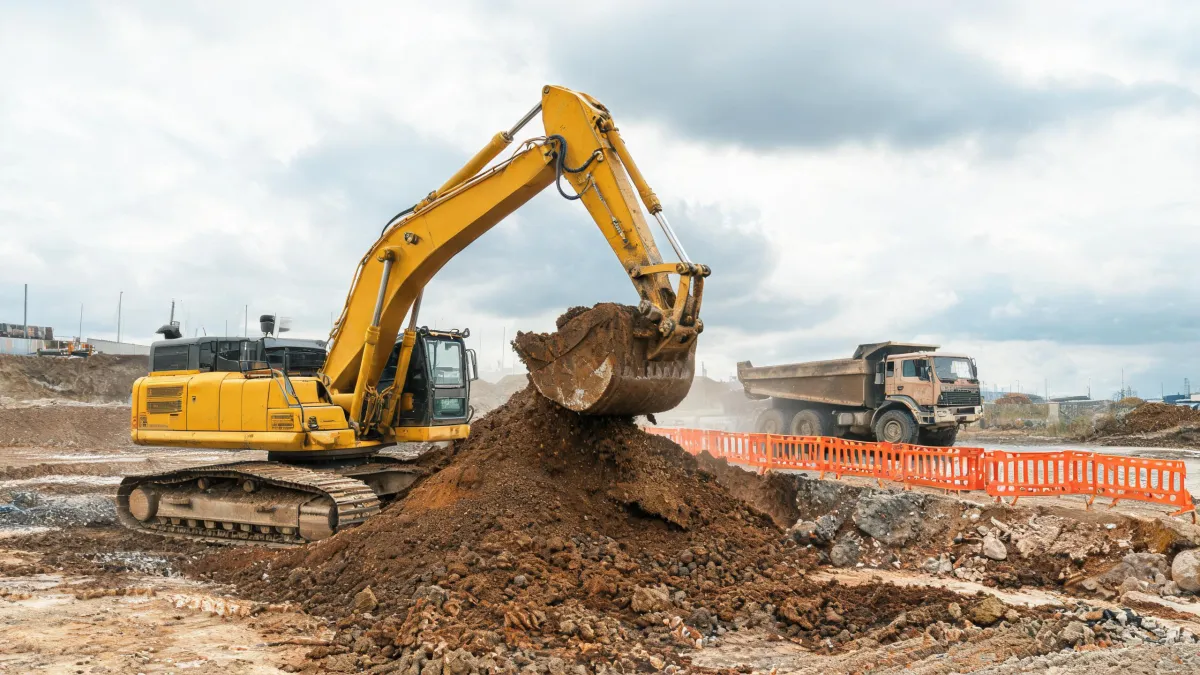
How to Evaluate Backhoe Manufacturers: 3 Documents That Matter More Than Price
If you're comparing backhoe attachment manufacturers and your first question is about unit price, you're setting yourself up for the same $4,200 mistake I made across four orders between 2021 and 2023. The manufacturers worth your purchase order will pass three document checks before pricing even comes up: a current WPS (weld procedure specification), a dimensional tolerance sheet specific to your machine's quick-coupler, and a third-party inspection report from within the last 90 days. If any of those three is missing, the conversation's over—no matter how good the quote looks.
I'm not a consultant or a quality inspector. I handle bulk equipment and attachment purchasing for a dealer network, and I've personally wasted roughly $4,200 across four purchase orders that failed on exactly these items. The first one hit in September 2021—a 40-piece bucket order for a contractor client. The buckets arrived, and the pin diameter was off by 2mm on 12 of them. On paper, the manufacturer's spec sheet said "CAT 320 compatible." In practice, "compatible" meant "close enough if you don't mind a rattle."
That single order cost us $1,150 in rework and a two-week delay. The client was patient. The next one wasn't.
Why Price-First Evaluation Fails on Backhoe Attachments
Here's the thing nobody tells you when you're starting out in equipment procurement: backhoe attachments aren't widgets. A bucket, a thumb, a quick coupler—these are wear parts that see shock loads every cycle. A $200 price difference between two manufacturers disappears the first time you have to pull a bucket off a machine because the coupler tolerance was sloppy.
I learned this the hard way with a private-label excavator attachment order in early 2022. Brand A quoted $1,890 per unit. Brand B quoted $2,340. I went with A. The welds passed visual inspection but failed a dye-penetrant check at our shop—porosity that wouldn't surface until a few hundred hours in the field. We shipped them back. The "savings" of $450 per unit turned into a $3,100 loss after return freight, re-inspection, and a four-week gap in our delivery schedule.
Looking back, I should've paid the extra $450. At the time, $3,100 wasn't on my radar—I was comparing quotes, not consequences.
The question everyone asks a backhoe attachment manufacturer is "what's your best price?" The question they should be asking is "what do your last 90 days of third-party inspection reports look like?"
The Three Checks I Now Run Before Any Attachment Order
1. Weld Procedure Specification (WPS)
A real WPS tells you the welding process, filler material, amperage range, and pass sequence for a specific joint. Some manufacturers hand you a generic one-pager that supposedly covers every product they make. That's a red flag. For backhoe buckets and couplers, you want a WPS tied to the exact steel grade and plate thickness you're ordering.
When we started evaluating Sunward excavator attachments and backhoe loaders for our dealer network back in mid-2023, this was the first document I requested. Their team returned a product-specific WPS within a day. Honestly, that surprised me—we'd waited 4 to 5 business days for comparable documents from other suppliers.
Never expected that kind of response speed from a manufacturer that also runs its own excavator and loader lines. Turns out when a company builds the whole machine, they tend to take attachment specs a lot more seriously.
2. Dimensional Tolerance Sheet for the Quick-Coupler
This is the check I skipped in 2021. Quick couplers across machine brands have different pin diameters, center-to-center distances, and locking geometry. As of 2024, OEM-grade couplers from CAT, Komatsu, and Volvo typically spec tolerances within ±0.5mm on pin diameter—these charts are published in their public technical libraries. If a manufacturer only advertises "compatible with CAT/Komatsu/Volvo" without numbers, they aren't giving you a spec. They're giving you marketing copy.
Ask for the actual tolerances. If they say ±1.5mm is fine for a backhoe attachment on a 20-ton machine, walk. It isn't.
3. Third-Party Inspection Report—Dated
"We inspect every unit" means nothing without evidence. Ask for a dated report from a lab like SGS, TÜV, or BV within the last 90 days. If your order is for private-label excavator attachments, this matters even more—your brand goes on the product, and your dealer network feels the fallout when weld or dimensional issues slip through.
We've caught 47 potential spec problems across roughly 220 attachment orders using this checklist since Q4 2022. Not every one would've caused a failure. But in 11 cases, the manufacturer's own documents directly contradicted their marketing claims.
Where This Framework Breaks Down
Honest caveat: these three checks are overkill for small orders of standard parts from a manufacturer you've used for years. If you're buying 10 standard 24-inch buckets from a long-standing supplier and they've never failed you, demanding a fresh third-party inspection just slows things down for no reason.
These checks matter most when:
- You're ordering a custom or non-standard attachment
- It's a first or second order from a new backhoe attachment manufacturer
- The attachment is going out under your brand as a private-label product
- Your end client has a deadline a return shipment would blow past
And one more thing. If you're sourcing used excavators as a lower-cost entry point, verify the attachment documentation still exists. I've watched used excavator private-label deals fall apart because the coupler on the machine was a third-party retrofit and nobody kept the tolerance sheet. The machine was fine. The paperwork wasn't.
The lowest quote is only the lowest quote until it isn't. That $450 I tried to save in 2022 is still the first number I think about when I open a new set of bids. Not because the money was huge—because the process was wrong.